
The Magic In Soul Connections
/Yoga Therapy Openings for October.
Read MoreYoga Therapy Openings for October.
Read More
Last month I introduced the concept of Interoception, one’s ability to feel internal physiological signals within the body. You can read that blog post here.
This time I’d love to share an excerpt from a paper exploring the relationship between interoception, emotional competence, decision making, and learning. The paper goes on to explain that “indeed, existing research indicates an association between low interoceptive sensitivity and alexithymia (a difficulty identifying one’s own emotion), underscoring the link between bodily and emotional awareness.” :
“A significant role for interoception in higher-order cognition is supported by empirical evidence demonstrating that interoceptive ability predicts competence in a variety of emotional domains as well as in learning and decision-making. Within the affective domain, interoception appears to be necessary for all aspects of emotional processing. Much of this evidence utilizes an individual differences approach to demonstrate that, across individuals, interoceptive sensitivity is correlated with emotional stability, emotion regulation, and emotional intensity (the tendency to experience more extreme emotions with greater awareness and depth of experience). Indeed, the vast majority of current theories of emotion suggest that both interoceptive signals and cognitive evaluation of one’s internal and external environment contribute towards emotional experience.
Within learning and decision-making, most classic theories of learning apportion a crucial role to signals of punishment and reward, making the accurate perception and recognition of these signals as fundamental to learning. Equally fundamental are theories of value in decision-making − where the aim of decision-making is to select the option with the highest value. It is clear that value may be impacted by interoceptive state (the value of water is higher when dehydrated than when not), or be interoceptive in nature (as in the drive for primary reinforcers such as sex and food).
Some theories ascribe a more fundamental role to interoception by suggesting that decision-making is guided by stored representations of the bodily consequences of stimuli and responses. These stored representations, provided they can be perceived, are a further source of information when calculating the value of options. Regardless of one’s theoretical standpoint, however, it is clear that accurate perception and recognition of interoceptive signals is necessary for learning and decision-making.”
source: https://www.sciencedirect.com/science/article/pii/S187892931630127X
A simple recipe for home yoga practice.
Read More
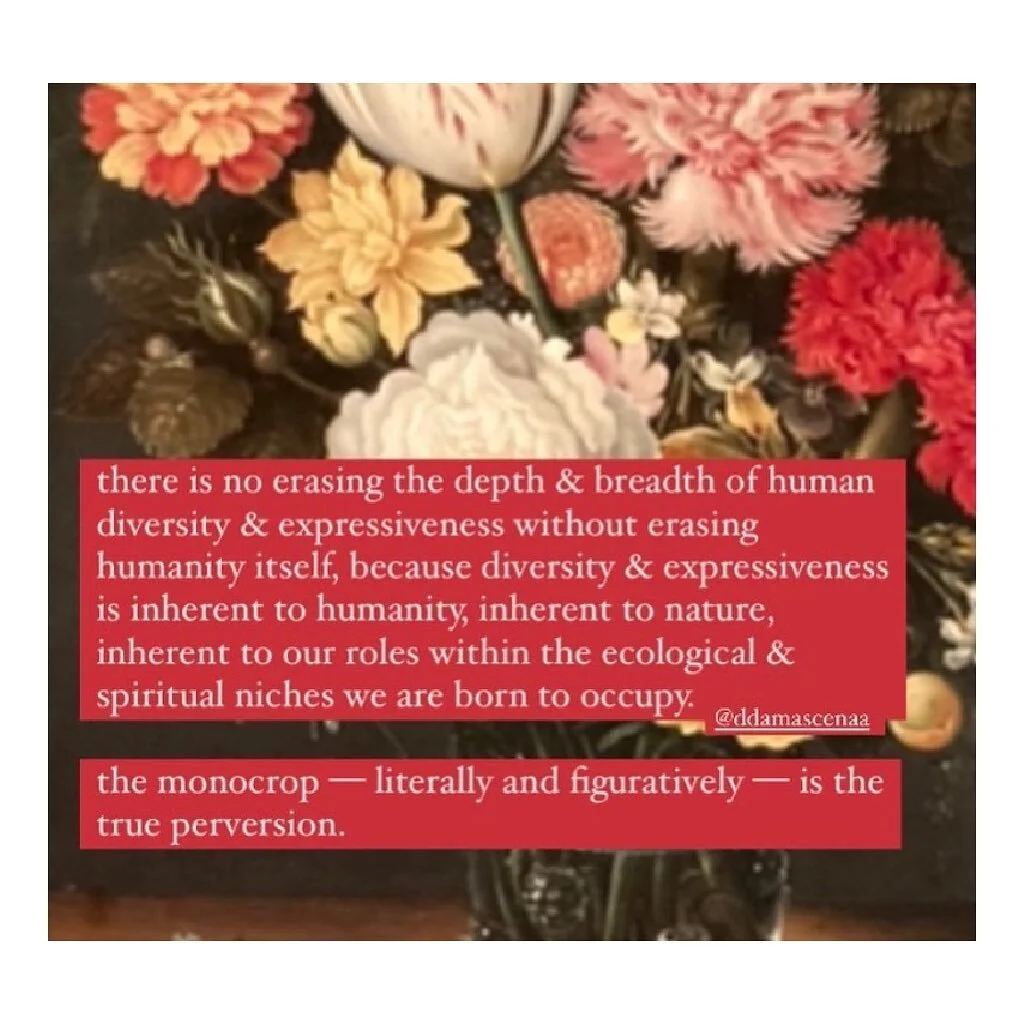
“The Buddha is said to have given a “silent sermon” once during which he held up a flower and gazed at it. After a while, one of those present, a monk called Mahakasyapa, began to smile. He is said to have been the only one who had understood the sermon. According to legend, that smile (that is to say, realization) was handed down by twenty eight successive masters and much later became the origin of Zen.
Seeing beauty in a flower could awaken humans, however briefly, to the beauty that is an essential part of their own innermost being, their true nature. The first recognition of beauty was one of the most significant events in the evolution of human consciousness. The feelings of joy and love are intrinsically connected to that recognition. Without our fully realizing it, flowers would become for us an expression in form of that which is most high, most sacred, and ultimately formless within ourselves. Flowers, more fleeting, more ethereal and more delicate than the plants out of which they emerged, would become like messengers from another realm, like a bridge between the world of physical forms and the formless. They not only had a scent that was delicate and pleasing to humans, but also brought a fragrance from the realm of spirit. Using the word “enlightenment” in a wider sense than the conventionally accepted one, we could look upon flowers as the enlightenment of plants.
[…]
Once there is a certain degree of presence, of still and alert attention in human beings’ perceptions, they can sense the divine life essence, the one indwelling consciousness or spirit in every creature, every life form, recognize it as one with their own essence and so love it as themselves. Until this happens, however, most humans see only the outer forms, unaware of the inner essence, just as they are unaware of their own essence and identify only with their own physical and psychological form.
[…]
Is humanity ready for a transformation of consciousness, an inner flowering so radical and profound that compared to it the flowering of plants, no matter how beautiful, is only a pale reflection? Can human beings lose the density of their conditioned mind structures and become like crystals or precious stones, so to speak, transparent to the light of consciousness? Can they defy the gravitational pull of materialism and materiality and rise above identification with form that keeps the ego in place and condemns them to imprisonment within their own personality?
The possibility of such a transformation has been the central message of the great wisdom teachings of humankind. The messengers – Buddha, Jesus, and others, not all of them known – were humanity’s early flowers. They were precursors, rare and precious beings. A widespread flowering was not yet possible at that time, and their message became largely misunderstood and often greatly distorted. It certainly did not transform human behavior, except in a small minority of people.”






⚡️ Blog Archive